Design notes
Small rules. Interesting consequences.
A switch that touches its neighbors. A launch you cannot steer. What happens when a small rule changes the whole way you play?
By ClickClick · · 3 min read
Follow a rule into the next decision
A rule can be one sentence and still reshape a whole game. In Afterglow, pressing a window flips its neighbors too. That turns a simple act of selecting a dark window into a question about several lights. The player has to predict a consequence that extends beyond the thing being touched.
This is a useful way to inspect an idea: describe the action, then describe what the player must think about before taking it. If those sentences are nearly identical, there may be little room for a decision yet. A prototype can help you find out without building a large world first.
Remove steering and change the kind of attention
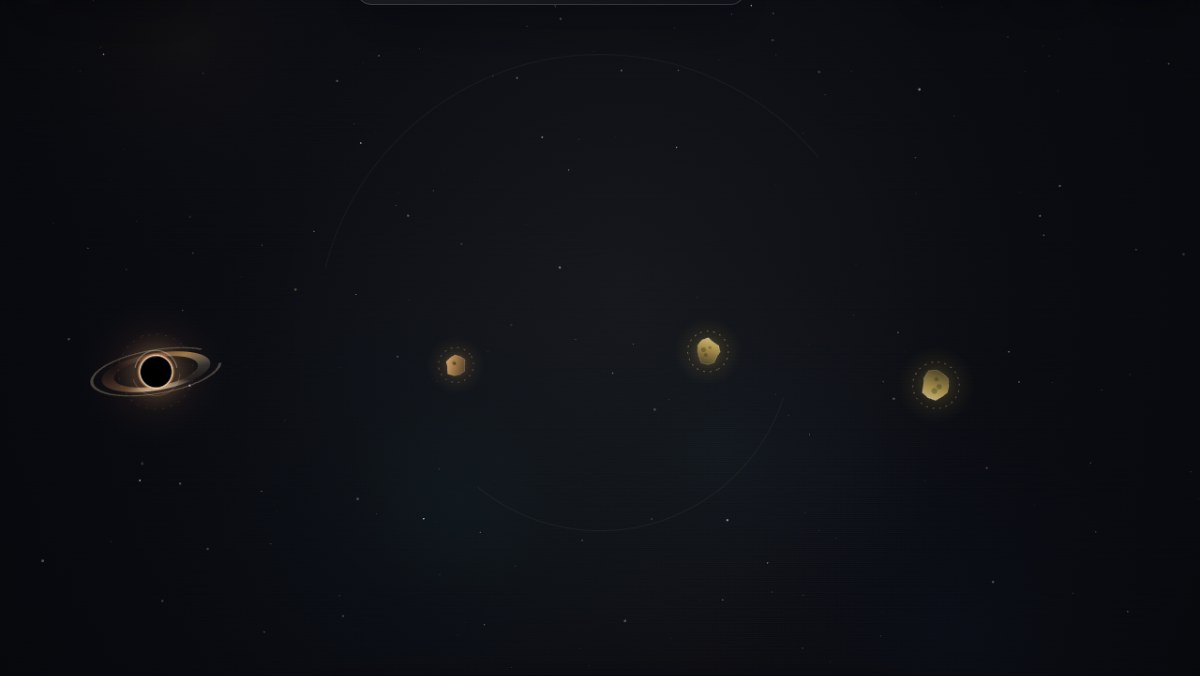
Blackhole Run allows a single launch. Once you release, gravity carries the attempt. Direction and thrust need to express the plan before the motion begins. Watching the result becomes part of playing because it tells you what to change next.
That rule also creates a need for readable feedback. A missed target is more useful when you can understand the route that missed it. Wraparound edges and rival black holes add interesting possibilities, but they also add things the player must be able to see and learn.
Limit an escape hatch and give it a cost
Stack 21 offers two burns. A troublesome card can disappear, but the option is scarce. Deciding whether to spend one means looking beyond the current total and considering the other three lanes. The escape hatch becomes another decision instead of removing the decision entirely.
The useful design question is whether that cost is visible. If a player knows how many burns remain and what busting does, they can form a plan. Hidden costs make the same choice harder to learn from, even if the underlying rules are unchanged.
Turn a what-if into a small experiment
The Lab is a place for playable ideas that are still taking shape. A prototype does not need to promise a full game. It needs enough of a loop to answer one useful question: does this rule produce a decision worth repeating?
- Write down one rule and the decision you expect it to create.
- Build the smallest playable situation that exposes that decision.
- Watch where a player pauses, misreads the state, or tries something unexpected.
- Adjust the rule or its feedback, then try the same situation again.
Try the rule before reading more about it
Open one of the games below and pay attention to a single moment: a switch that changes too much, a card you almost burn, or a launch that bends away from your prediction. Ask which information would have helped you choose differently.
That observation is a practical starting point for a design experiment. You can try a new rule, change the way the current rule is explained, or make its result easier to see. The next test will tell you more than a longer feature list.
Updated